
Does Your LLC Need an Operating Agreement? What Every Business Owner Should Know
Forming an LLC is one of the smartest early moves an entrepreneur can make. You get liability protection, flexibility in how you're taxed, and a legitimate business structure that signals to clients, banks, and investors that you're serious. What most LLC owners don't realize is that registering with the state is only half of what you actually need to do.
The other half is the operating agreement, and most people skip it.
What Is an Operating Agreement and Why It Matters
When you file your LLC paperwork with the state, you get a legal shell. The operating agreement is what goes inside that shell. It is a private contract among the members of the LLC that spells out how the business actually runs: who owns what, who makes decisions, how profits flow, and what authority each member holds.
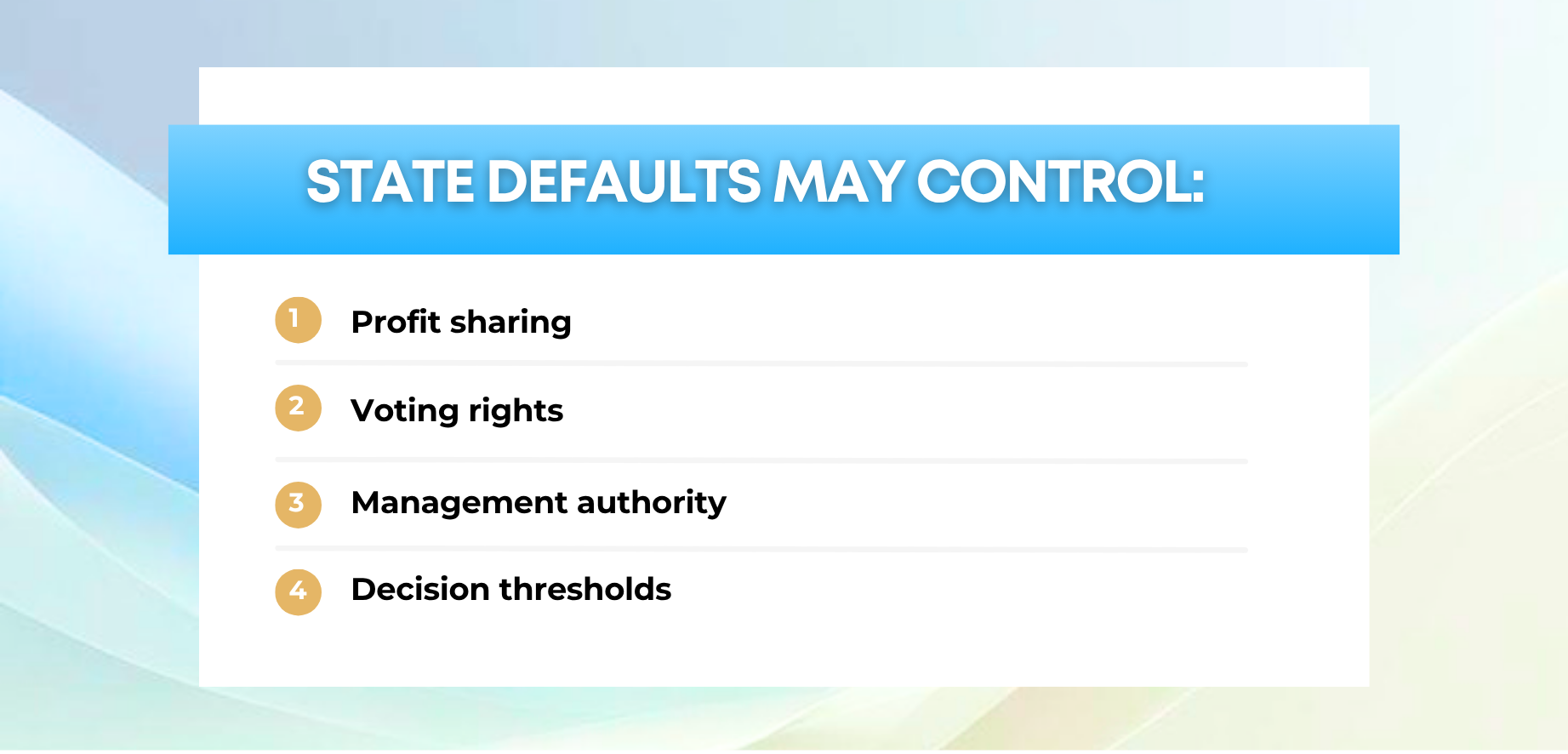
Without an operating agreement, your state's LLC statutes fill in the blanks. Those statutes were written to apply broadly across all LLCs, not your specific business. They most likely do not reflect anything close to what you and your partners actually intend.
In other words, without an operating agreement, your business is governed by default state rules rather than your own terms, potentially in ways that may directly conflict with your expectations.
How Operating Agreements Prevent Common Business Disputes
Here is an example of how that may play out. Two partners contribute different amounts to get the business started. One puts in $80,000 and the other puts in $20,000. They shake hands, agree that the larger contributor is the majority owner, and move on. What they never put in writing is how profits get distributed or what voting rights each person holds. When the business starts generating real money, both partners discover they have completely different assumptions about what the ownership split actually means in terms of day to day. One expects decisions to reflect the 80/20 dynamic. The other believes major decisions require mutual agreement regardless of contribution.

Neither is wrong as a matter of logic, and neither position is right as a matter of law. That gap is exactly what a well-drafted operating agreement is designed to close before it ever becomes a dispute.
Who Needs an LLC Operating Agreement
Every LLC needs an operating agreement. That includes single-member LLCs, which often comes as a surprise.
Single-Member LLCs
If you are the only member, there is no partner to argue with, so the agreement can feel pointless. The reality is that banks, lenders, and investors routinely require an operating agreement before they open an account or extend financing.
Beyond that, operating without an agreement gives courts more room to question whether the LLC is truly separate from its owner. If someone sues the business and wins, that distinction is the only thing standing between the judgment and personal assets. An operating agreement helps reinforce it.
Did you know? Forming an LLC does not guarantee your personal assets are protected. Courts can set aside the LLC structure entirely, a legal doctrine known as piercing the corporate veil, leaving you personally liable for business debts and judgments. One of the most common reasons courts do this is the absence of a formal operating agreement, which signals the LLC was never treated as a legitimate separate entity.
Multi-Member LLCs
For multi-member LLCs, the stakes are even higher. Two people starting a business together usually share the same vision at the beginning. Over time, that may change. Someone's financial situation shifts. Someone wants to work less. Someone wants to bring in another member. Someone dies. Each of those moments becomes significantly more complicated without a clear operating agreement in place.
When There Is No Operating Agreement in Place
Consider a scenario that plays out more often than it should. Two partners shake hands, register an LLC, open a joint bank account, and never give the operating agreement another thought. Things go well for a year or two. Then one partner decides he wants to bring his brother into the business. The other disagrees. There is no provision addressing how new members can be admitted, no voting threshold required for approval, and nothing in writing about what either partner can or cannot do unilaterally. What follows is months of dispute, legal fees that dwarf what a proper agreement would have cost, and ultimately a business that neither party may want anymore.
An operating agreement is a set of decisions made together while everyone still agrees, so there is a framework for when they do not. Here, the absence of a clear operating agreement is what turned a manageable disagreement into a legal dispute.
Key Terms Every LLC Operating Agreement Should Cover
A well-drafted operating agreement addresses ownership percentages, voting rights and responsibilities, powers and duties of members and managers, and the distribution of profits and losses. A comprehensive operating agreement should clearly define these terms to avoid ambiguity and future disputes.
Each of those areas deserves its own careful attention. The companion article, What Goes in an Operating Agreement and Why Every Clause Matters, goes deeper into each provision and what is at stake when any one of them is missing or vague.
When a Template Works and When It Does Not
Templates are available, and for a straightforward single-member LLC with no unusual circumstances, they can be a reasonable starting point. Read every word carefully and make sure any state-specific references actually match your state's law. The moment the situation becomes more complex, a generic operating agreement template often becomes a liability rather than a solution.
If the LLC has multiple members, non-cash contributions, intellectual property, outside investors, or differing rights among members, a qualified attorney should draft, or at minimum review, the agreement. In those situations, a customized operating agreement is essential to accurately reflect the business structure.
As a general rule, if there is any issue that could create confusion, disagreement, or uncertainty in the future, it should be addressed now. The cost of a well-drafted operating agreement is a fraction of what a single unresolved dispute will cost.
The Bottom Line
An operating agreement is what turns your LLC from a filing into a functioning business. Think of it as the rulebook that sets expectations early, helps avoid confusion, and gives you a clear path forward as your business grows and changes. Whether you are just starting out or already operating, putting one in place brings clarity to how your business runs.
Need Help Drafting or Reviewing an Operating Agreement?
If you have an LLC but do not yet have an operating agreement, or if you already have one that should be reviewed, now is a good time to confirm your business is properly structured and protected. For a complimentary initial consult, you can reach us at (206) 429-5222 or schedule an appointment here.
DISCLAIMER: The materials and information contained in this article are for informational purposes only. These materials do not constitute legal advice nor does engaging with this website create an attorney-client relationship. Accordingly, you should seek legal counsel from an attorney knowledgeable about the specifics of your situation before taking or refraining from action. Nazzaro PLLC has attorneys that are licensed to practice law in Washington, Texas, Virginia, Washington D.C., California, and New York.

ABOUT THE AUTHOR
Archana Rao
Former Business Attorney
Archana Rao is a former business attorney at Nazzaro PLLC with a background in complex contract work across domestic and international product and technology transactions.
Ready to Talk?
Click below to schedule your consult.